X 1 2 3 4 5 6 7 8 9 | ||||||||||||||
Retrofitting for Energy Conservation energy tips excerpts order now |
Electrical Power Distribution
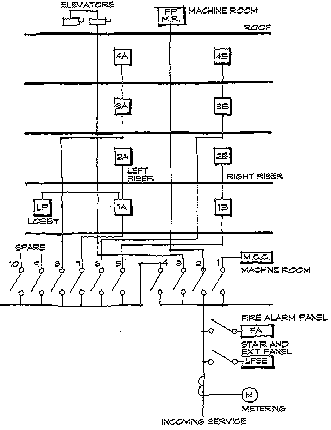
The electrical system is the backbone of a building. A poorly designed electrical system generates harmful harmonics in a building. These harmonics waste a lot of energy in buildings - like power noise - and a whole, whole lot more power in a regional power grid. This phenomena is so extremely complex that nobody knows how to deal with it - although there are some practical, proven solutions in my textbook from McGraw-Hill, Electrical Design Guide for Commercial Buildings (details on the main page of the website). The generally accepted solution is to build a bigger, more massive power grid and to just hope the problem goes away.ExcerptsElectricity is not distributed throughout a building free. As the electricity flows through wires and busbars it must overcome the resistance in the conducting metal. This causes a slight reduction in voltage and diminishes the power available at the point of use. The closer the current is to the wire's rated capacity the more energy is lost to resistance. This loss is evidenced as heat, which itself costs energy to eliminate in the cooling season. Excessive heat also damages the insulation covering of the wire, reducing the integrity of its insulating cover, and increasing the possibility of shorts and even fires.Another way to think of electricity and to understand how it works is to consider the analogy of water flowing through pipes. (The mathematical expression of both systems is identical.) The electric current correlates to water flow and voltage is the same as pressure head. Just as water flowing through pipes experiences a pressure loss from the friction of the rough pipe inside surface, the electric current loses voltage due to the imperfect conductivity of the wiring.Wherever electricity flows, then it sacrifices some of the energy to overcome resistance. This energy is manifested as heat that can cause further complications. The projects of this section are more than potential energy savers, when implemented in the right circumstances, but also lessons in the distribution and use of electrical power.8.1 Utility rate analysisMany utilities have a dozen or more different rate structures for commercial clients, each with many different provisions and riders. This complex billing scheme changes constantly, according to the prevailing regulatory climate, legislative mandates and fuel costs.One of the first things an energy auditor does is to consult the utility on behalf of his client to obtain a copy of the latest bills and the applicable rate schedule. It is not unusual to find billing errors that will save money before the energy study even begins! However, it is not necessary to obtain a consultant to validate the billing rate.The first think to do is to talk with other businesses in the area that may have the same billing structure. Inquire about their rate schedule, use characteristics and how much they are paying. A new rate or structure might be discovered that your business can apply for, to reduce your own utility bills.The next step should be to visit with a representative of your utility. Any confusion about your bill, how it is measured and calculated, should be clarified. It is important to learn about all of the services available, their advantages and disadvantages as well as how you can qualify. Strive to keep current on the various facets of your bills and how they are affected by any energy conserving projects. This will give you immediate feedback on the success of the conservation program in real terms and provide valuable feedback to participants to encourage their further interest and involvement.Some of the items that are important to keep current on include:1. Fuel adjustment charge2. Demand charge3. Low power factor penalties4. Transformer and equipment ownership5. Peak demand and time of occurrenceThe occurrence of peak demand can be especially important in planning to reduce the demand charge. For example, if a restaurant owner sees a peak energy use first thing in the morning every day, when the staff arrive and turn on all the equipment, this is a clear signal to stage the equipment on for a flatter demand curve.8.2 Elevator controlsSome of the largest motors in a building are the elevator motors. They run almost constantly sixty or eighty hours a week, nonstop. A popular energy saving project is to replace these motors with new high efficiency units. The savings are boosted by the demand charge for electricity used during the regular business hours.Other means are available to building management to reduce the power used by the elevators. Controls to send only one elevator in response to any given call will not only avoid repetitious trips but will make the idle elevators available for other calls. Limiting to one the operable elevators after hours is another thrifty option that will not inconvenience tenants unnecessarily. Another idea is to downsize the motors on all but the freight elevator to spend less energy while transporting lighter loads.8.3 Motor balanceMost motors over one horsepower in size use three phase power. This includes fan and pump motors, air handlers, cooling tower and chiller motors. It is important that the voltages to each phase are constant. An imbalance in voltage will create an even greater current imbalance. This, in turn, will cause the motor to draw more current to perform a given amount of work and the windings will heat up, perhaps to dangerous levels. It is recommended that a motor not be operated at a voltage imbalance of one percent or more.The phase to ground voltage can be measured for each phase to a motor, to determine the quality of power provided. The power supply with a noticeable voltage difference should be quickly remedied; one option is a Whetstone bridge arrangement to supply the same voltage to each leg regardless of loading. The motor will thereafter not only use less electricity but will emit less heat that must be extracted by the air conditioning system.Another maladjustment that can cause a motor to waste energy is improper mounting. Worn or loose brackets will cause wear on the motor bearings, heat build up and inefficient transfer of power to the equipment. Finally, the means of power transmission - via belt, gear or drive shaft - should be in proper condition and optimum adjustment, to minimize mechanical losses and maximize the power transferred to the pump or fan.
________________________________
banner advertising below this line
© 2002 WH Clark